


USA


Australia
USA
Australia
Our blog shares both our expertise and bit of company culture.
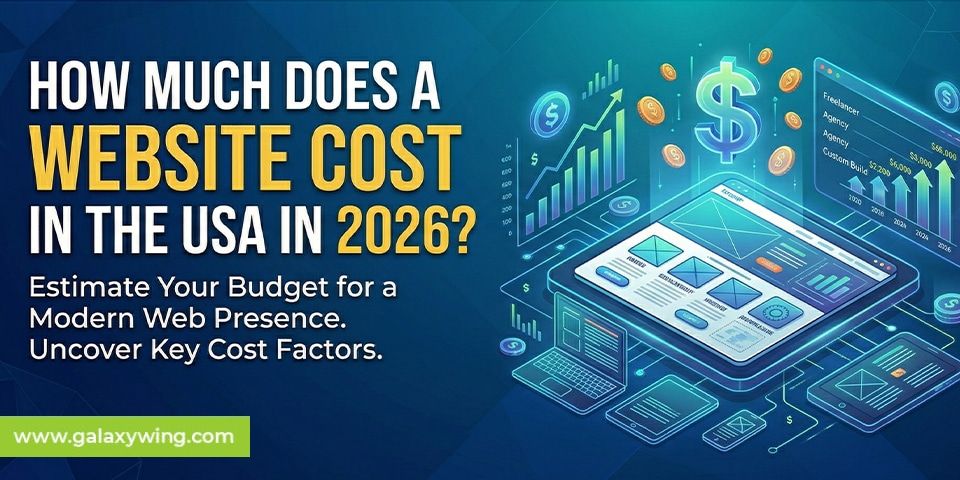
Discover how businesses across the US are slashing customer support expenses while improving satisfaction scores — and how you can do the same.
Customer support is one of the largest operational expenses for any growing business. Between salaries, training, benefits, and turnover costs, maintaining a full human support team can drain budgets fast. The average customer support agent in the United States costs between $35,000 and $50,000 per year — and that figure climbs higher once you factor in management overhead, software licenses, and office space.
But what if you could handle the majority of support interactions without adding headcount? That is exactly what modern AI chatbots deliver. According to IBM, chatbots can handle up to 80% of routine customer queries without any human intervention. For a business fielding thousands of support tickets per month, the AI chatbot customer support cost savings can be transformative — often reducing total support spend by 60% to 80%.
In this guide, we break down the real numbers, walk through how it works, and show you how to implement an AI chatbot that pays for itself within months.
Before we talk about savings, let us understand what you are currently spending. A typical mid-sized business with a five-person support team faces the following annual costs:
All told, a small support team can easily cost a business $250,000 to $400,000 per year. And that team still cannot provide 24/7 coverage, responds in minutes (not seconds), and can only speak one or two languages fluently.
AI-powered chatbots address every one of those pain points. Here is why AI chatbot customer support cost savings are not just hype — they are measurable:
A well-trained AI chatbot can resolve 80% of incoming queries instantly. These include password resets, order status checks, return policy questions, appointment scheduling, FAQ responses, and basic troubleshooting. That means your human agents only handle the remaining 20% — the complex, high-value interactions where a personal touch actually matters.
Providing round-the-clock support with human agents typically requires three shifts, which means tripling your team size or outsourcing to expensive call centers. An AI chatbot operates 24 hours a day, 7 days a week, 365 days a year with no overtime, no shift differentials, and no holiday pay. Your customers in different time zones or those browsing at midnight get the same instant support.
The average human agent response time in live chat is 2 minutes and 40 seconds. For email support, it stretches to 12 hours or more. An AI chatbot responds in under 2 seconds — every single time. Faster responses mean higher customer satisfaction scores (CSAT), lower abandonment rates, and more completed purchases. Forrester Research found that 53% of customers will abandon an online purchase if they cannot find quick answers.
Modern AI chatbots powered by large language models can communicate fluently in 50+ languages. Hiring bilingual or multilingual agents costs 15–25% more per head. With an AI chatbot, you serve your entire global customer base from a single system.
When your business grows and support volume doubles, you do not need to hire, train, and onboard new agents. Your chatbot scales instantly to handle 100 conversations or 10,000 conversations simultaneously with no degradation in quality or speed.
The following table illustrates the stark differences between maintaining a traditional support team and deploying an AI chatbot solution:
| Factor | Human Support Team (5 Agents) | AI Chatbot Solution |
|---|---|---|
| Annual Cost | $250,000 – $400,000 | $15,000 – $60,000 |
| Availability | 8–12 hours/day (business hours) | 24/7/365 |
| Average Response Time | 2–12 minutes (live chat) | Under 2 seconds |
| Scalability | Limited; requires hiring | Unlimited concurrent conversations |
| Languages Supported | 1–2 (without additional hires) | 50+ languages |
| Consistency | Varies by agent, mood, experience | 100% consistent responses |
| Onboarding Time | 2–6 weeks per new agent | Instant updates and deployment |
| Data & Analytics | Manual reporting | Real-time analytics and insights |
Not all chatbots are created equal. Understanding the two main categories will help you choose the right solution for your business.
Rule-based chatbots follow pre-defined decision trees. They work by matching user inputs to scripted responses using if-then logic. These bots are simple to build and work well for very narrow use cases — like guiding a user through a fixed menu of options.
Pros: Low cost to build, predictable responses, easy to audit.
Cons: Cannot handle unexpected questions, feel robotic, require manual updates for every new scenario, and break down quickly when users deviate from expected paths.
AI-powered chatbots leverage large language models (LLMs) like Anthropic’s Claude and OpenAI’s ChatGPT to understand natural language, interpret intent, and generate human-like responses. These bots can:
Pros: Natural conversation flow, handles edge cases, improves over time, supports complex workflows.
Cons: Higher initial investment, requires thoughtful implementation and testing.
For most businesses seeking meaningful AI chatbot customer support cost savings, an AI-powered solution is the clear winner. The upfront investment pays for itself many times over within the first year.
Let us walk through a concrete scenario so you can see exactly how the numbers work.
Company: A mid-sized e-commerce business
Monthly support tickets: 5,000
Current team: 6 support agents
Average agent salary: $42,000/year
Total annual support cost (with overhead): $320,000
Tickets handled by chatbot: 4,000 (80%)
Tickets requiring human agents: 1,000 (20%)
Agents needed post-implementation: 2 (reduced from 6)
Annual cost for 2 agents: $105,000
Annual chatbot platform and maintenance cost: $36,000
Total annual support cost after AI: $141,000
| Metric | Value |
| Annual savings | $179,000 |
| Cost reduction | 56% |
| ROI in year one | 397% |
| Payback period | Under 3 months |
And this calculation does not even account for the revenue gains from faster response times, higher conversion rates, and improved customer retention. Businesses that implement AI chatbots typically see a 10–15% increase in customer satisfaction scores and a measurable lift in repeat purchases.
While virtually any business with customer-facing operations can benefit, the following industries see the highest returns:
Order tracking, return processing, product recommendations, and size/fit guidance are all perfectly suited for chatbot automation. E-commerce companies report up to 70% reduction in support tickets after chatbot deployment.
Technical troubleshooting, onboarding walkthroughs, billing inquiries, and feature explanations can be handled efficiently by AI bots trained on product documentation.
Appointment scheduling, insurance verification, prescription refill requests, and symptom triage are high-volume, repetitive tasks where chatbots excel — while freeing up staff for patient care.
Account balance inquiries, transaction history, fraud alerts, and loan application status updates are all automatable. Banks and fintech companies using AI chatbots have reported 40–60% reductions in call center volume.
Property inquiries, scheduling viewings, qualifying leads, and answering common questions about listings keep real estate chatbots busy around the clock.
Booking modifications, check-in assistance, local recommendations, and loyalty program inquiries are natural chatbot territory, especially given the 24/7 nature of travel.
Rolling out an AI chatbot does not have to be complicated. Here is a proven implementation roadmap:
Analyze your last 3–6 months of support tickets. Categorize them by type, complexity, and resolution time. Identify the repetitive queries that make up your highest volume — these are your chatbot’s first targets.
Do not try to automate everything on day one. Start with the top 10–15 most common query types. Define clear escalation paths for situations the chatbot should hand off to a human agent.
Select an AI platform that fits your needs. For most businesses, a custom chatbot built on top of leading LLMs like Claude or ChatGPT — integrated with your existing systems — delivers the best balance of capability and cost. A skilled AI developer can tailor the solution to your specific business logic and workflows.
Feed your chatbot with product documentation, FAQ content, support scripts, policy documents, and historical ticket data. The richer the training data, the more accurate and helpful the bot becomes.
Run internal testing with your support team. Have them try to break the bot with edge cases, unusual phrasing, and off-topic questions. Refine responses and escalation triggers based on the results.
Launch in a hybrid mode where the chatbot handles frontline queries and human agents monitor conversations. This lets you catch issues early and build confidence in the system.
Track key metrics: resolution rate, customer satisfaction, escalation rate, average handling time, and cost per ticket. Use these insights to expand the chatbot’s capabilities over time. Most businesses reach optimal performance within 60–90 days of launch.
They do — for complex issues. But for the 80% of queries that are simple and repetitive, customers actually prefer instant answers over waiting in a queue. A Salesforce study found that 69% of consumers prefer chatbots for quick communication with brands.
Modern AI chatbots powered by models like Claude are remarkably capable. They understand nuance, maintain context across long conversations, and can be fine-tuned to match your brand voice precisely.
Not with the right development partner. A well-built chatbot integrates seamlessly with Zendesk, Intercom, Salesforce, Shopify, HubSpot, and virtually any platform through APIs. The key is working with experienced developers who understand both AI and your business systems.
The data is clear. Businesses that deploy AI chatbots for customer support are cutting costs by 50–80%, improving response times from minutes to seconds, and delivering better customer experiences across the board. The technology is mature, the ROI is proven, and the competitive advantage goes to companies that act now.
The question is no longer whether you should implement an AI chatbot — it is how quickly you can get one up and running.
At Galaxywing, we design and build custom AI chatbot solutions that integrate with your existing systems and start delivering AI chatbot customer support cost savings from day one. Our team of experienced AI developers builds intelligent, scalable chatbots tailored to your industry, your customers, and your business goals.
Explore our Chatbot Development Services to see how we can help your business automate support, reduce costs, and deliver exceptional customer experiences around the clock.
Want to discuss your specific needs? Hire an AI developer from Galaxywing and start building your competitive advantage today.
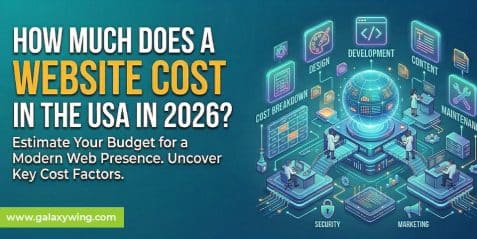
How Much Does a Website Cost in the USA in 2026? If you are a small business owner planning to build or redesign a website this year, the first question on your mind is probably: how much is this ...
Read More
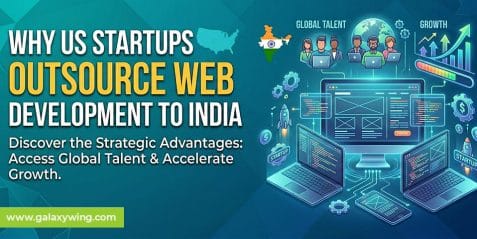
Why US Startups Outsource Web Development to India: A Practical Guide for Founders and CTOs US companies save 60-70% by outsourcing to India while accessing a talent pool of 5 million+ developers....
Read More 
In an increasingly digital world, your business can't afford unexpected downtime, data breaches, or lagging systems. The foundation of long-term success lies in having dependable, scalable, and sec...
Read More 
In today’s digital age, your website is the face of your business. It’s where first impressions are made — and often, where potential customers decide whether to trust your brand or move on. Unf...
Read More 
2025 has been a transformative year for the web development industry. From AI-driven automation to advanced performance standards, the digital landscape evolved faster than ever. Businesses that up...
Read More 
Corporate / Agency Style At our studio, we believe great design is more than just looks — it’s about purpose, precision, and performance. Our creative team crafts visually stunning, user-focused d...
Read More At our core, we are dedicated to helping businesses flourish and achieve extraordinary sales growth. With over a decade of experience, we have been instrumental in empowering numerous organizations to thrive in their respective industries. What started as a small team with a modest vision has evolved into a formidable force of passionate professionals who are committed to design and excellence.
Since our establishment in 2015, we have consistently delivered exceptional results. Our team’s expertise, combined with our unwavering dedication, has enabled us to make a significant impact on the success of our clients. We understand the unique challenges businesses face and tailor our strategies and solutions to drive remarkable growth.
Our approach is built on collaboration, innovation, and a deep understanding of our clients’ goals. We work closely with businesses to develop customized strategies and implement cutting-edge solutions that yield tangible results. By leveraging our expertise, industry knowledge, and a relentless pursuit of excellence, we help businesses thrive in today’s competitive landscape.
As we look ahead, our commitment to helping businesses grow better remains unwavering. We will continue to evolve, adapt, and push boundaries to deliver even greater value to our clients. Together, let’s embark on a journey of growth, success, and unparalleled achievement.
Join us as we empower businesses to reach new heights of excellence.


 By Galaxywing IT Solutions
  Mar 10, 2026